 Jayded Metalworks
Most metalwork is worth saving
A gate that has dropped, sticks on the ground or will not latch is usually not a gate that needs replacing. It is a gate with a worn hinge, a moved post, a cracked weld or a bit of corrosion in one place — and all four are repairable for a fraction of the cost of a new one.
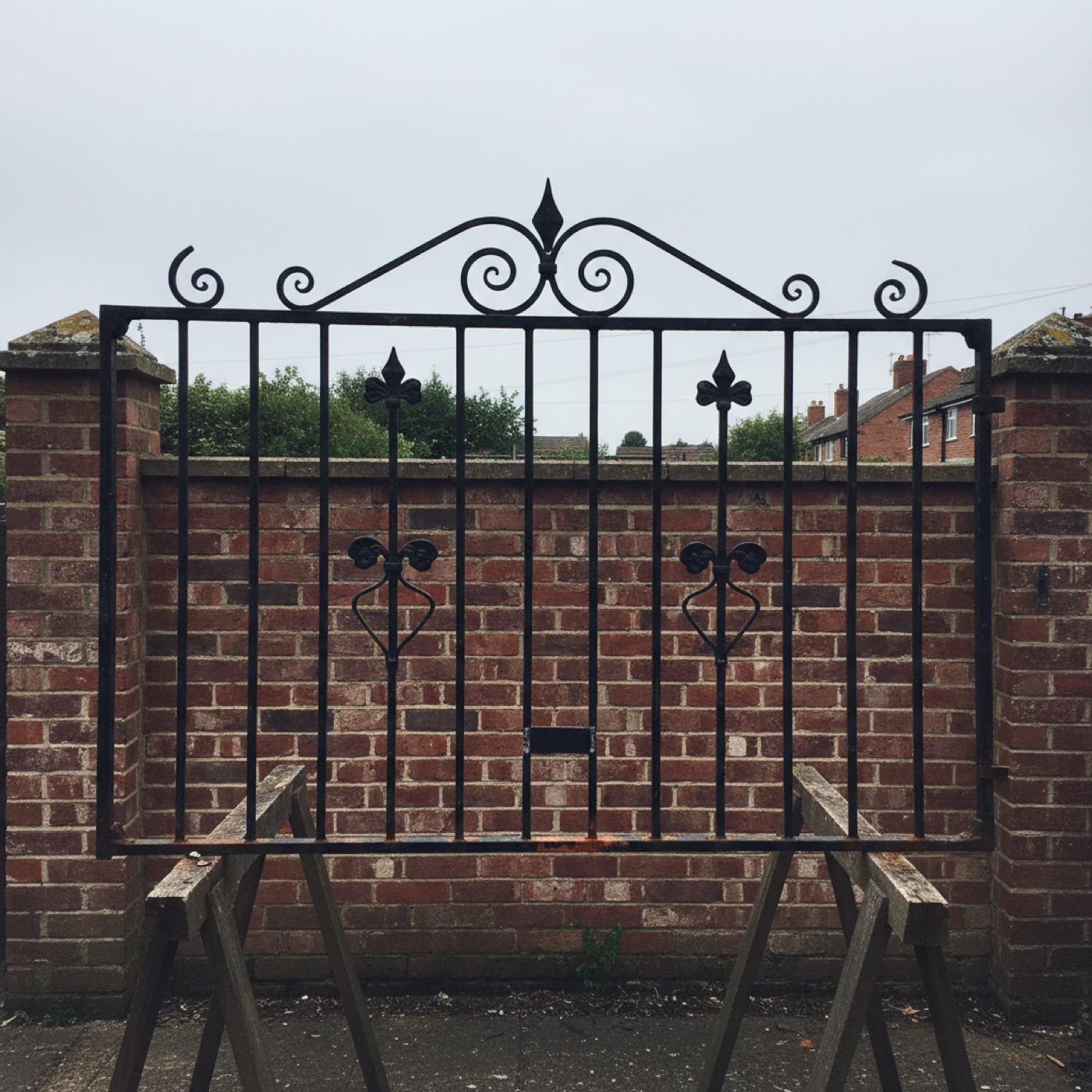
Older ironwork in particular is often worth keeping. The material in a Victorian railing or a properly made mid-century gate is frequently better than what an equivalent budget would buy new today, and it suits the building in a way a replacement will not.
Why gates drop and stick
Almost always one of four things, and telling them apart is most of the job:
Worn hinges. Pins and bushes wear, and once there is play in a hinge the whole leaf drops at the far edge. Usually the cheapest fix of the lot.
A moved post. If the post itself has leaned — frost heave, a vehicle knock, or a foundation that was never deep enough — the gate is fine and the ground is the problem. Rehanging without fixing the post just moves the fault.
A cracked weld. A gate that has gone out of square often has a failed joint at a corner. It has to be cut out and rewelded properly; grinding it back and running a bead over the top is a repair that fails again within the year.
Corrosion. Water sits in the bottom rail of most gates. Once a section has gone soft it needs cutting out and new steel letting in.
We will tell you which of these it actually is before doing anything.
Alterations
Repairs are only half of it. We also change metalwork to suit new circumstances: narrowing or widening a gate after a driveway is altered, heightening railings or a gate for privacy or for a dog, cutting down an inherited gate to fit a different opening, adding a matching run of railings, or adapting an existing gate to take an automation motor it was never built for.
That last one needs an honest assessment. Automation loads a gate far harder than a hand can, and a frame built for manual use will not always take it. We will look at it and tell you either way.
Restoration
Old ironwork that has been painted a dozen times and left to weather can usually be brought back. That means stripping the accumulated paint, cutting out and replacing anything that has corroded beyond saving, repairing or replicating missing decorative components, and refinishing the whole piece so it lasts.
Where a decorative element is missing entirely, we can fabricate a match from the surviving ones.
When we will tell you to replace it
Sometimes the honest answer is that repair is not worth it — when corrosion is through the section in several places at once, when the original was badly made to begin with, or when the cost of repeated repairs will exceed a new piece within a couple of years.
We would rather say that up front than take money for a repair we do not believe in. If it is worth saving we will save it, and if it is not we will tell you.
Send us a photograph
For most repairs a couple of clear photographs and a description of what it is doing wrong is enough for us to give you a sensible idea of the work and the cost.
We repair and alter metalwork throughout Nottinghamshire and Derbyshire, and travel to Birmingham for larger repair and restoration jobs.