 Jayded Metalworks
The jobs that do not have a product name
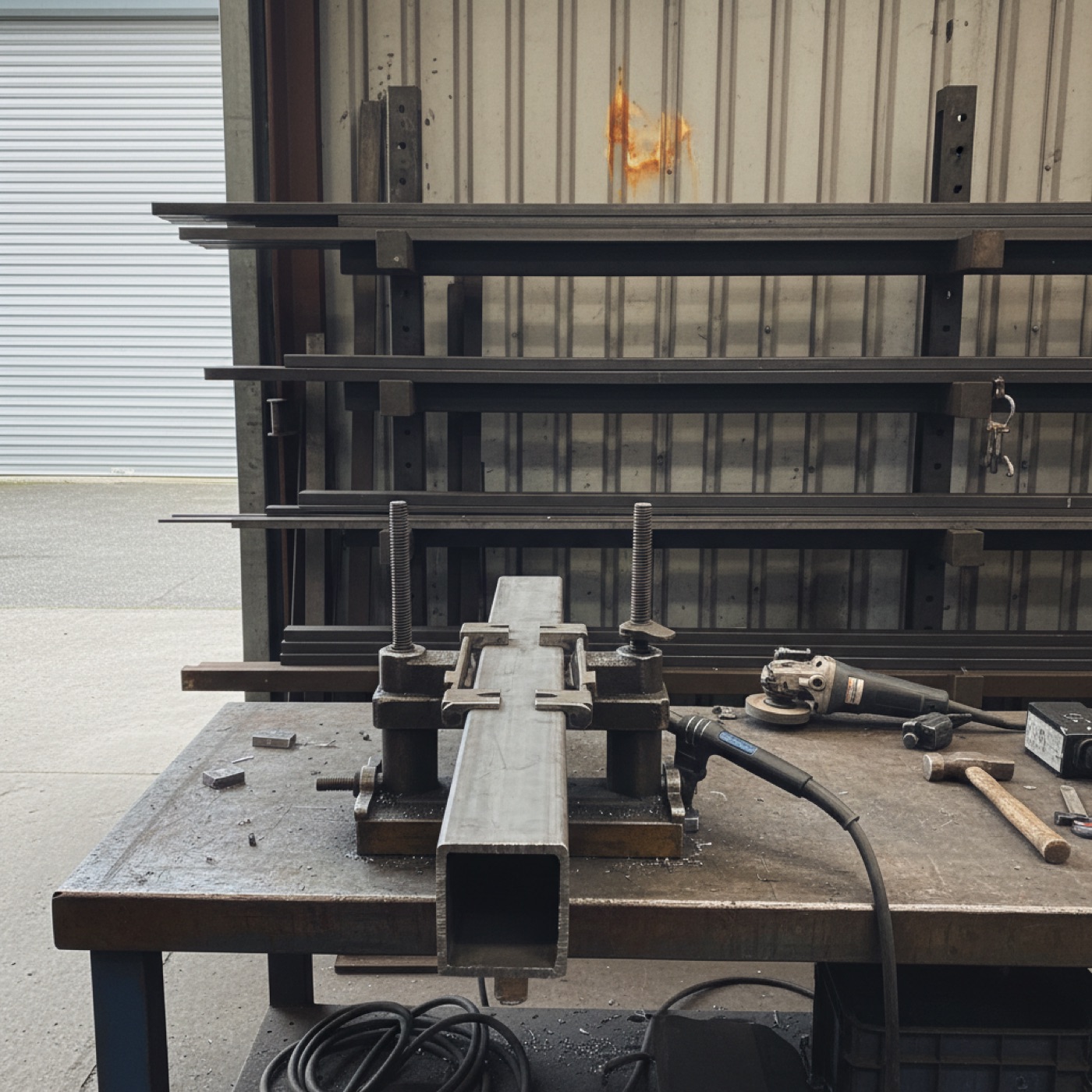
Gates, railings and balconies are the things people search for. A good deal of what actually comes through the workshop is none of those: a bracket that has to fit around an existing pipe, a frame to carry a water tank, a replacement part for a machine whose manufacturer stopped trading, a subframe for a piece of equipment, a one-off support that a builder needs on site tomorrow.
That is general fabrication, and it is the foundation everything else here is built on.
MIG and TIG, both in-house
MIG welding is fast and strong, and it is the right process for most structural steelwork, frames and general fabrication in mild steel. It lays down material quickly, which matters on longer runs and thicker sections.
TIG welding is slower and far more controlled. It is what you want on stainless steel and aluminium, on thin material where MIG would blow through, and anywhere the weld itself will be visible on the finished piece. A TIG weld can be laid down neatly enough to need almost no dressing afterwards.
Having both in-house means the process is chosen to suit the job rather than to suit the equipment available, which is not always the case elsewhere.
Materials
Mild steel — strong, economical, easy to weld and finish. The default for structural and general work.
Stainless steel — corrosion resistant with no coating required, and the right answer in wet environments, food-related settings and anywhere a bright finish is wanted permanently.
Aluminium — around a third the weight of steel and naturally corrosion resistant, but it behaves very differently under heat and needs TIG and a different technique entirely. Plenty of workshops quietly decline aluminium work; we do not.
Working from whatever you have
We can work from a technical drawing, a hand sketch with dimensions, a photograph, or the original part itself. The last of those is often the easiest — if you bring us the thing that has broken, we can measure it directly and make its replacement.
Where the original is no longer manufactured, fabricating a replacement is frequently cheaper and quicker than trying to source a discontinued part, and it can be improved at the same time if the original failed for a reason.
Cutting, drilling, bending and finishing
Fabrication is rarely only welding. Material has to be cut to length and to profile, holes have to be drilled or punched, sections bent or rolled, and edges dressed so the finished piece is safe to handle. All of that happens as part of the same job here rather than being sent out and waited on.
Trade and domestic
We work for both. Builders, contractors, landscapers and property maintenance firms use us for the metalwork element of their projects; homeowners come to us for the single awkward thing that nobody sells.
Neither is treated as the small job. Send us a photograph and a description and we will tell you whether we can make it, and what it will cost.
We take trade and domestic fabrication from across Nottinghamshire and Derbyshire, and work with builders and commercial clients in the Birmingham area.